Showing posts with label BBC. Show all posts

Thursday, 8 November 2018

Some?!?

A curious piece turned up on the BBC the other day from their 'reality check' team.
Health Secretary Matt Hancock wants to encourage people in England to make "better choices" around their alcohol, sugar, salt and fat intake, while getting more exercise. 
He is promising to spend more on public awareness initiatives to prevent obesity in the latest in a long line of of public health campaigns over the years. 
Three of the best-known health messages are eating five portions a day of fruit and vegetables, getting 150 minutes of exercise a week and quitting smoking. 
But what evidence is there that these have worked?
Being a tax-funded organisation, the BBC team were of the opinion that gentle messages from the government - based on education of the public - are not effective. The fact this is exactly the message that tax spongers in 'public health' were screaming about when Hancock made his policy announcement is surely a coincidence.


There was one area, though, where the 'reality check' team had a different view.
The Labour government banned smoking in enclosed public places and workplaces in England in 2007. 
The result is a marked decrease in the number of smokers.
Yep, when vile coercion is used instead of messages intended to change personal choices without a big stick, the BBC was hinting that this was a huge success.

Except, erm, it was nothing to do with the smoking ban, as the graph they publish with the article shows very well.


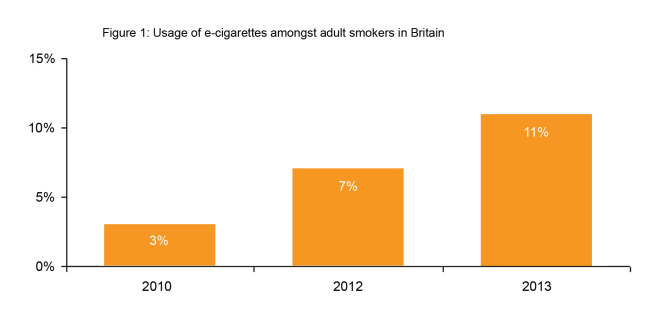
The result of the smoking ban was not a "marked decrease in the number of smokers". The marked decrease in the number of smokers came from 2012 when e-cigs went mainstream. As you can see from the BBC's graph above, all that the smoking ban did was halt a previously massive "marked decrease" of smokers prior to 2007.

The 'reality check' team did mention something around this at the very end of the article - how could they not considering it's so fucking obvious - but only in faint terms (emphasis mine).
Changes in law, habits and tastes may all contribute to changes in attitude which may affect lifestyle choices. For example, some of the decline in smoking could be attributed as much to the rise of the e-cigarette as anything else.
Some?!? Look at the figures for crying out loud.

It's a pretty rum definition of reality and an odd understanding of the word check if the BBC refuse to face up to what reality actually is and fail to check it properly.

Looks more like a supportive puff piece for their comrades in the tax-leeching game to me. 


Thursday, 9 February 2017

The BBC And Suspiciously-Timed Snus 'Science'

Articles on the BBC about snus are about as rare as sightings of Willy Wonka factory tour golden tickets, but just such an occurrence was spotted on Tuesday.

What looks suspiciously like a well-timed piece of trademark tobacco control junk science to muddy the waters in the run-up to a CJEU challenge of the EU snus ban was - as can be expected with a study negative about nicotine - embraced warmly by Nanny Beeb.
Swedes warned snus tobacco raises diabetes risk
Researchers in Sweden have issued a warning over snus - the country's favourite nicotine hit - challenging claims it is a risk-free alternative to smoking.
Stop right there, BBC.

Haven't you been telling us all for decades that smoking is the root of every ill known to man - from lung cancer to ingrowing toenails - but now a tea bag of pasteurised tobacco placed under a person's lip isn't a better choice? I do wish these prurient bansturbators would make their minds up.
A study in The Journal of Internal Medicine found using snus increases the risk of developing diabetes. 
Researchers said that one or more pots of snus per day increase the risk of developing type 2 diabetes by 70% - the same risk level as smoking a packet of cigarettes a day. 
Five to six pots a week - a slightly lower consumption level - increases the risk by 40%. 
Researchers from Umea University, Lund University and the Karolinska Institute followed 54,500 snus users between 1990 and 2013 to compile the study.
40%, 70%, aren't they scary numbers, huh? Well when expressed like that, perhaps, but let's make a comparison.

Using the same terms, Cancer Research UK warns that the increased risk of lung cancer from smoking is 2600%. Yet even after years of stating how many other diseases smoking is supposed to cause, the BBC doesn't see fit to mention the plethora of other problems that snus simply doesn’t produce. Instead focusing on a vanishingly small risk of diabetes which even the authors of this research concede is so lightweight that the margin of error could mean there is no risk at all.

The risk is even more negligible when you consider that Diabetes UK doesn't even list smoking as a risk factor on its website, so why anyone should be concerned about snus being equally benign is anyone's guess.

Worse than that, the BBC also fails to mention that this meta-analysis has come to a polar opposite conclusion to other research that preceded it on the subject of snus and diabetes. In fact, even co-authors of this study - Sweden's pre-eminent anti-tobacco fake science factory, the Karolinska Institute - declared the risk of snus for causing diabetes to be non-existent in June last year.
Aims
It has been suggested that moist snuff (snus), a smokeless tobacco product that is high in nicotine and widespread in Scandinavia, increases the risk of Type 2 diabetes. Previous studies are however few, contradictory and, with regard to autoimmune diabetes, lacking. Our aim was to study the association between snus use and the risk of Type 2 diabetes and latent autoimmune diabetes of adulthood (LADA). 
Conclusion 
The risk of Type 2 diabetes and LADA is unrelated to the use of snus, despite its high nicotine content. This opens the possibility of the increased risk of Type 2 diabetes seen in smokers may not be attributed to nicotine, but to other substances in tobacco smoke.
The June report also found that former snus users had a lower rate of Type 2 diabetes than never users, so when all previous studies on a subject say one thing but another says something wildly different, a responsible news source should be enquiring as to why, don't you think? Yet the BBC don't do so and - I could be wrong - I don't remember the BBC ever reporting on any of the other snus studies that dismissed the link to diabetes. A cynic could be forgiven for thinking that, by making a big noise about a rare outlier, the Beeb has resorted to clickbait journalism instead of calm analysis of serious subject matter, eh?

The BBC could also have looked into the meta-analysis itself which was weighted heavily towards extreme consumers in the north of Sweden. An area of the country which is renowned, amongst other dodgy behaviours, for impressive consumption of moonshine. Did this research control for other lifestyle factors such as this? No! No, of course it didn't.

Additionally, if the implication is - as the BBC article tends to suggest - that the nicotine in snus is the cause of diabetes, where does NRT figure in the analysis? It would surely have the same effects, yet has been issued a medicinal license and therefore had to pass through numerous clinical trials, none of which have flagged up any particularly nasty risk of diabetes presumably.

And as for this nonsense:
Dr Sofia Carlsson, a researcher at the Karolinska Institute, told The Local: "The current picture in Sweden is that snus is not as dangerous as smoking, and there is some evidence for that too - but importantly, there haven't been that many studies on Swedish snus.".
Haven't been many studies? What does she think this 805 page "review of the scientific literature on snus" was all about then?

You have to wonder why the (EU-funded) BBC seem to have dipped their toe in the scientific debate on snus at this particular time when they haven't before, especially with this particular research which has holes you could drive an Iveco truck through. Did someone say EU ban court case?

Who cares if the study is poorly-designed junk? Who cares that it contravenes a long-held consensus? Who cares that it could have adverse consequences for health?

The establishment that plays together, stays together. 


Thursday, 6 August 2015

Fighting To Stay At The Trough

See, via the BBC, this is why 'public health' is an expensive and wasteful drain on our taxes and society in general (it doesn't reflect well on the BBC as a renowned news source either, to be honest).
A sharp decline in the number of smokers using an NHS support programme to help them quit has been linked to the rise in popularity of e-cigarettes. 
The Smoking Matters service in Dumfries and Galloway helped 102 people in deprived areas kick the habit in the past year - 251 below target.
What's not to like, eh? Instead of quitting smoking the expensive way for the country - by taking up the time of public sector staff being highly-paid out of funds ripped from the wages of workers who quite need the cash right now - smokers are spending their own money on something much more effective and which doesn't cost the state an arm and a leg during times of austerity.
Public Health Consultant Dr Andrew Carnon said the trend was being mirrored across Scotland.
Public health 'consultant'? Good grief, it's wheels within wheels of waste, isn't it?
He said many people saw e-cigarettes as a stepping stone to stopping smoking.
Yes indeed, I believe the figure is 1.1 million ex-smokers thanks exclusively to e-cigs ... and counting.
That was the first decrease seen in recent years and it was also suggested this could be "partly explained" by the rise in the use of e-cigarettes.
Partly explained? Does this guy know how very big a number 1.1 million is?
Dr Carnon said that although there was still a lack of evidence about their effectiveness, the NHS might have to review and adapt its smoking cessation service in the future.
Erm, there are 1.1 million confirmed cases proving that there is, indeed, evidence of the effectiveness of e-cigs. This guy is a doctor, are they not required to be able to count?
"The position of e-cigarettes is at the moment not fully clear because they are so new there hasn't been all the research carried out," he said. 
"We actually don't know at this stage just how effective they are in helping people to stop smoking."
No, we really do. And research really has been carried out, I've linked to some of it above. There is also a dedicated report from the Smoking in England site if he would care to look, it comes to the same kind of conclusions.

Shouldn't someone being paid out of our taxes as a 'consultant' have some clue of what he is meant to be talking about?
"There is also a risk, potentially at least, that smokers may use them in certain settings where they are not allowed to smoke tobacco but without any intention of actually stopping smoking tobacco cigarettes."
That really is none of your fucking business sunshine. Are you really saying that e-cigs are bad because they offer smokers a choice? If you offer patches to a smoker and they decline, that's as far as your involvement should go. Same applies with e-cigs if they choose not to quit. The most insane and tyrannical reaction is to condemn e-cigs entirely because people won't bow to your fascist demands, you weapons grade chimp.
He said that was clearly a case where they would not be of any benefit to a smoker's health.
Utter bollocks. If they are using an e-cig instead of going outside to smoke, there is a benefit. How the tobacco control industry has evolved to believe that the theories of Paracelsus have been suspended for just one substance is quite remarkable. It's nothing short of being a cult now.
"The third possibility, which again would not be a great one, is that people who don't smoke might feel that e-cigarettes are something that are much safer that they would like to try," he added.
It's only a possibility in the minds of people whose income relies on pretending it is a possibility. All research worldwide has concluded that it isn't happening. I think Mr Carnon should take his fat nose out of the tax trough and go do something more worthwhile with his life ... like fetching shopping trolleys for Asda.
"We just don't have the research evidence at the moment to say whether there is a risk that those people who might simply be experimenting with e-cigarettes might get drawn into using tobacco cigarettes at a later stage."
No, Carnon, we damn well do! In fact, even ASH say that "there is no evidence from our research that e-cigarettes are acting as a gateway into smoking". You're on the same side, you must have heard of them, surely?
Dr Carnon said it was clear from research that people had the best chance of quitting with some support.
No it's not. There has been a dramatic uptick in successful quitting since e-cigs appeared on the scene, and considering most stop smoking services don't advocate e-cigs, it suggests you're badly wrong.
"It is not just about the nicotine replacement, it is not just about use of e-cigarettes," he said.
No, it's also about your wallet, isn't it?
"It is actually about working with somebody to help you through the difficult process - because it's not easy to quit smoking."
Well, apparently, for over a million ex-smokers, it is with an e-cig.
"So really we would encourage people either to go to the smoking cessation service which is called Smoking Matters or to one of their local pharmacies who can help them or they can ask their GP if they would like some advice."
Or they can save the country money by doing what 1.1 million smokers have done, do it on their own without shovelling wasteful cash at self-enriching parasites like you, who endorse a service which boasts an embarrassing record of failure at an astonishingly high cost to the public.

The sooner costly, inept, smug, and mendacious troughers like Carnon are unhooked from the state's teat, the better.

Follow the money, it's never been about health.


Monday, 30 March 2015

BBC: 'Success' Is 25% Of An Industry Collapsing

Life at Puddlecote Inc is extremely busy at the moment and likely to be for some time, so content may be sparse here for a while.

In the meantime, you may be interested in a 10 minute piece on the Irish smoking ban from the BBC World Service which you can listen to here. You see, the BBC has told the world that Ireland's ban was a great success because they found a former opponent whose pub is still in business. So that's all right then.

He's one of the lucky ones, though, because there were 9,964 licensed pubs in Ireland 2004 when the ban arrived, but only 7,509 - and falling - eight years later in 2012 according to the FT. Or, as one publican described it ...
Landlord Liam Fitzpatrick, who began working in the pub from the age of 14, says there has been a cultural shift in Ireland over the past decade with people drinking at home rather than in the pub.
Well, with supermarket booze still being as cheap as it has always been, the cultural shift has been out of pubs and into a place where rules based on junk science don't place an obstacle in front of enjoyment and relaxation. What else would one expect?

The BBC reporter, however, didn't think it was worth mentioning that over a quarter of Ireland's pub stock has been extinguished since the oh-so-wonderful smoke-free experiment in 2004. And there we were thinking that the BBC is a world-renowned source of agenda-free news, eh?


Friday, 9 January 2015

According To The BBC The Causes Of Cancer Are Whatever Public Health “Charity” Spin Doctors Say They Are

This is a guest article by Chris Oakley, columnist at The Free Society and Liberal Vision

The BBC provided an excellent example over the festive period as to why the public should be deeply suspicious of mainstream media output on health and science. On Boxing Day it ran a story under the headline “Life choices 'behind more than four in 10 cancers'” and followed it on January 2nd with an article telling us that “Most cancer types 'just bad luck'“ .

Those two apparently contradictory headlines suggest scientific disagreement with respect to the causes of cancer but they are not necessarily conflicting and thanks in no small part to BBC spin, it is probable that many people will not fully appreciate the significance of the second article, or its implications for the credibility of public health strategy.

The Boxing Day piece appeared as headline BBC Health news but contained absolutely no news at all. It was a regurgitated press release from CRUK that referenced a 2011 literature review produced by Max Parkin, a medic turned epidemiologist who spent much of his career working for the scientifically non-league but politically premier division WHO. It was published in a journal produced by CRUK.

There is nothing technically wrong with what Parkin produced but any scientist worth the name would question the reliability of the data he used and his report’s dependence on dubious epidemiology bedevilled by both author and publication bias.

Mercifully, the BBC did not reproduce the whole nauseating press release in which CEO Harpal Kumar urges the government to introduce “standardised packaging for cigarettes without delay” and Linda Bauld tells us that she wants to make sure that “the public and the policy-makers know the evidence behind the benefits of these lifestyle changes is solid”. There is a big difference between Bauld’s stated objective and the much nobler one of actually providing solid scientific evidence, but I am sure that a public health disciple with a degree in politics will not let mere scientific credibility stand in her way.

It is hard to fathom why the allegedly quality conscious BBC chose to publish this low grade political posturing as news but Chris Snowdon may have intuited why the political wing of CRUK pushed its neo-puritan agenda just a week before the veracity of its message was to some extent challenged by a more scientifically rigorous paper published in the prestigious independent journal Science.

The paper by oncologist Bert Vogelstein and biostatistician Cristian Tomasetti demonstrates a strong correlation between the lifetime risk of developing many cancers and the number of times that healthy stem cells divide within tissues, a process that occurs routinely throughout our lives. It suggests that the majority of cancer risk can be attributed to random mutations during these routine cell divisions with environmental lifestyle and hereditary factors combined being accountable for only a third of the variation in cancer risk.

The author’s consider their findings quite important because whilst they acknowledge that primary prevention (such as vaccines and lifestyle changes) can have a significant impact on the incidence of some cancers, a better approach for the majority of cancers might be to focus on early detection and treatment. They do not seek to undermine the efforts of others but recent history has taught us that adherents to public health ideology are easily threatened by even mildly dissenting voices arguing in favour of science and reason, so it is not impossible to imagine that the CRUK press office’s evident influence at the BBC was used to limit damage and massage public opinion.

I invite readers to compare and contrast the two BBC articles that I link to above. The Boxing Day article is a shameless PR piece in which absolutely no effort is made to balance dubious CRUK claims. The January 2nd article by James Gallagher - who in my view is normally one of the BBC’s better journalists - covers Tomasetti’s Science publication reasonably well but distracts from its findings by repeatedly referencing CRUK opinion on lifestyle and cancer. A link is provided to the CRUK website, a CRUK spin doctor is quoted at length and we are unnecessarily informed that CRUK research claims that “more than four in 10 of the total number of cancers were down to lifestyle.”

The article gives the impression of having been co-written or at least clumsily influenced by either an incompetent CRUK scribe or a heavy handed BBC editor.

Early on, in a worryingly patronising, moralistic section we are incorrectly told that:
“The study shows that two thirds of cancer types are simply chance. But the remaining third are still heavily influenced by the choices we make. Too much booze, time in the sun or being overweight mean... “
But later we read that:
“The remaining third of cancer types, which are affected by lifestyle factors, viruses or a heightened family risk…”
The two statements are somewhat contradictory and further add to schizophrenic nature of an article that is ostensibly about a US research paper but which relentlessly plugs the views of UK based public health activists.

It is unsurprising that UK public are confused and ill-informed about the relationship between lifestyle and health when the dominant and supposedly independent national broadcaster appears to be incapable of reporting health news without extensive input and interference from favoured pressure groups.

I would greatly prefer a BBC that understands the full implications of what it reports, embraces investigative journalism and starts asking public health spin doctors some serious questions. Even if the unlikely claim that over 40% of cancers are lifestyle related were true, forcing everyone to adopt “healthy lifestyles” would not reduce the overall incidence of cancer by 40%. If Tomasetti is correct, social engineering might reduce the incidence of some forms of cancer but other forms would increase in relative importance because by far the greatest overall risk factor for any individual is age. Outside the alternative reality enjoyed by journalists, people who for example avoid bowel cancer through lifestyle change do not live forever and do not necessarily enjoy good health as a consequence.

It is in everyone’s interest, including the BBCs to see an end to partisan, dumbed down, slogan laden junk journalism posing as health news. It isn’t difficult to report science accurately, but it does require properly educated journalists with enquiring minds and editors who can see beyond the limited horizons of their politically correct media chums.


Sunday, 6 July 2014

Irrational Revulsion

Regular readers can't fail to have noticed that content here has been sparse of late. Well, almost non-existent is a more accurate description.

This is a result of real life in Puddlecoteville thrusting itself rudely front and centre like John Terry at an award ceremony. The fallout from four days away in Poland (see event report here) was an inevitable catching-up exercise at Puddlecote Inc, since - due to being booked way back in February - the trip just happened to coincide with necessary purchasing of four new vehicles and a renegotiation of the financing of our company premises. Most of the past week has therefore been spent by my either answering a backlog of 80 odd emails, or tip-toeing between two different bank lenders who are fighting like cats over debentures and worst-case-scenario priority over our assets (the plus side being that we traded them off against each other for mad keen interest rates). There was the odd cricket match and the usual family stuff to distract too, natch.

In the meantime, I've missed a lot but will hopefully be back on the keyboard for a few days before an even more hectic week looming from the 14th.

For a Sunday night listen though, try this half hour report on e-cigs before it is archived by the BBC website. Apart from the sensationalistic intro - where the presenter describes his "irrational revulsion" at seeing someone vaping while also displaying a herd-minded and typically hysterical nanny Beeb attitude to real tobacco smoke in the distance - it is a decent piece.

I'd urge you to don the earphones and listen to it in full, for one or more of the following points I found amusing or curious may interest you too.

Firstly, it came as a big surprise that - as mentioned around 11 minutes in - the government's Behavioural Insight Team (BIT) became aware of e-cigs as a way of "finding alternative solutions to regulation or just throwing money at problems" in 2010!

Funny that, because it was in June 2010 that the MHRA - a government body itself - threw money at a public consultation for a product they had decided was a problem, and attempted to regulate e-cigs out of existence before they knew anything at all about them.

No, really. The consultation text made it quite clear what they had planned.
In order to ensure there is no risk to public health from unlicensed products on the market that have not been assessed for safety, quality and efficacy and in the light of the developing extent of their use and familiarity we are consulting to elicit views on whether and how to bring all products containing nicotine into regulation. 
Option 1 – Whether products containing nicotine should be considered by the Agency to be medicinal products by function and, if so, whether all unlicensed NCPs should be removed from the market within 21 days
The MHRA’s preferred option is option 1, which is in line with current practice.
This move was only headed off by a monumental response from vapers which made it impossible for the MHRA to proceed. I don't remember the Behavioural Insight Team having anything to do with it, do you?

In fact, as described by Clive Bates in the comments here, the MHRA were still trying to nobble the consultation results even while the BIT was - apparently - identifying them as a great tool for harm reduction. Sounds like bollocks to me, but hey.

However, political douche-baggery aside, it is very encouraging that their spokesman is using hindsight so wisely here, and I reckon that this is something they could use to the government's advantage in light of May's election results. Because if the BIT think that e-cigs are such a force for good, why not advise HMG to reject entirely the EU TPD's ridiculous restrictions on them in 2016, eh? It would fit very well with the stance against interference from the EU we all voted for in May and would show the world that Cameron does actually possess a pair of balls, as well as kinda fitting in with his party's promise to abolish pointless red tape. What's not to like?

Look out also for the BBC's recognition of the dramatic effect of e-cigs around 22:00 or just before; for the accurate ridicule of provincial pillockry with the statement "policy in Wales is being driven by caution and fear"; and - for some comedy - marvel at Mad Stan Glantz say "I don't trust the tobacco companies" while being regularly caught telling huge whoppers (a character trait not missed by the BBC), and using the same fraudulent methods as other proven liars.

If your curiosity has been piqued, do pour your favourite beverage and go listen to the programme here.


Sunday, 1 June 2014

That BBC Plain Packaging Advert

One of the reasons we are coerced to pay for the BBC, at pain of hefty fines or (currently) imprisonment, is that the licence fee is its only revenue stream. It doesn't carry ads so Nanny Beeb's fingers are allowed to rifle our wallets with full backing of the clunking fist of government.

In return, we are promised that the BBC is fiercely independent, apolitical and scrupulously impartial. Imagine our surprise, then, on Thursday night to have been served up an hour long advert - far longer than the standard 30 seconds commercial channels derive income from - for plain packaging which was blatantly biased ... less than a week before the Queen's speech which Labour politicians are desperately hoping will include the policy.

We've seen some shit from the BBC on public health issues over the years (re-writing of an article on e-cigs overnight last week to add seven bells of prohibitionist toss was a particular doozy) but this tops it all.

Saving me the task, Snowdon has a comprehensive and accurate account here which I urge you to read if you haven't done so already. Of course, you can still watch the propaganda documentary yourself at this link for another 10 days if you're in the UK.

Incredibly, the first 5 minutes of the programme told us that:
"Smoking among 20 to 34 year olds has actually increased in the last few years"
Which suggests that the massive escalation of tobacco control industry activity in the past decade - as we fellow jewel robbers know very well - has been a disastrous failure.
"Everyone knows that smoking kills"
Yes, because as the programme-maker rightly says.
"Smokers can't fail to be aware of the health risks, they scream out from every packet"
So no need for plain packaging then, surely?

Yet the subsequent 55 minutes ignored all that and became, as Christopher Stevens in the Mail put it, "not a documentary but a polemic" and all in favour of ... plain packaging.

There's a reason for that, as Stevens also alluded to.
[Documentary veteran Peter Taylor] only knows one tune: The Evils Of Tobacco
Because, as he admits in his show, he's been playing this scratched record for 40 years now. How the BBC could not be aware that he would produce something so one-sided and contrary to their stated aims of fairness, impartiality and political independence is anyone's guess. Perhaps the BBC didn't give a stuff, I dunno.

However, they should very much care because Peter Taylor is one of the old school prohibitionists, the ones described so very well by George Ade in 1931 when America was finally waking up to the horror of alcohol prohibition.
The non-drinkers had been organising for fifty years and the drinkers had no organization whatsoever. They had been too busy drinking.
Taylor has been despising tobacco companies for nearly as long as I've been alive! While the rest of us have been enjoying life and having adventures, this man has dedicated himself to a particular sad hateful obsession. How can we blame him for taking advantage of the BBC's lax standards to produce a quite appalling piece of one-sided, timely political indoctrination on their mainstream highbrow channel?

After all, he makes it clear early on what his game is.
"Who finally wins the decisive battle over plain packaging has still to be decided"
This is true. The political debate is not yet over, especially considering those not consumed with hatred like Taylor are significantly opposed to plain packaging, despite the health lobby trying to ignore it. But Taylor seized his chance and used the BBC like a cheap whore to try to sway the "decisive battle" in favour of his corrupt tobacco control industry friends.

He was recently described as “honest, scrupulously fair and deeply insightful” but there was no sign of that in Thursday's offering, just snidey editing and policy-led advocacy which goes against everything the BBC claims to care about.

Perhaps someone should mention it to them.


Tuesday, 29 April 2014

Where Was The Pharma Cavalry?

There was a blaze of publicity yesterday on the subject of e-cigs but something, usually ubiquitous, was missing.

You see, ASH produced a press release which declared that not only are there now over 2 million vapers in the UK, but also that it seems e-cigs are not much of a big deal to anyone at all, really. The 'gateway theory' was trashed; the 'renormalisation of smoking' theory was not supported; and the public - despite acres of media coverage designed to scare them - are generally of the opinion that e-cigs are a good thing (as I've mentioned before is inevitable).

This prompted the BBC to pick up the story and run with it on their website and also on TV.


But where were the usual scaremongers? The pharma-enthralled cavalry rushing in to stuff the toothpaste back in the tube by mounting a desperate defence of outdated ideology?

The BMA were mentioned but Vivienne 'proven liar' Nathanson was not featured, nor was born-again 'expert' Martin McKee, nor the astonishingly gullible Chief Medical Officer Sally Davies. The best the BBC could muster in rebuttal was some geezer no-one has ever heard of from the Christie Foundation ... but even he was a bit limp and very easily rubbished by the BBC Breakfast presenter.

It's not like this was a get-someone-quick-as-it's-short-notice kinda thing. ASH's press release was embargoed until yesterday so the media had a few days to get their line-up organised.

So were the usual propagandists all on holiday? Off sick? Or just starting to realise that their campaign against vaping is making them look like pathetic stick-in-the-muds and actively harming their integrity? Maybe, just maybe, they've finally recognised that there is a date of guilty knowledge which has long since passed, and they'd prefer not to leave themselves open to being sued into abject poverty.

Who knows? But it was nice to see the public being properly informed for a change, without a bunch of ignorant dinosaurs butting in to inject their childish anti-industry prejudice into a debate that is, you know, quite important.

Let's hope this is not just an isolated outbreak of sanity, eh?


Sunday, 26 January 2014

Mission Creep Spotted On The BBC

Hot on the heels of a very balanced ITV Tonight programme on e-cigs comes a smorgasbord of ill-informed cockwaffle from the BBC. I guess we know which broadcaster boasts the more diligent investigative journalists now then, don't we?

Vaguely reporting on the government's plan to ban e-cig sales to under 18s - something of an industry standard amongst retailers anyway so a bit of a non-story - Nanny Beeb instead chooses to take the opportunity to regurgitate every piece of fabricated tobacco industry propaganda from the past year or two of fright-induced activism against vaping.

Continuing its usual shoddy modus operandi, the BBC calls on one of its staff (today in the form of some credulous non-entity called Richard Warry) to offer 'expert' analysis which is anything but, and quotes Chief Medical Officer Sally Davies in such a manner that we can only assume she is a dribbling idiot who should have nothing to do with regulating e-cigs, so little does she know about them.

You will also notice that Deborah Arnott is asked for her opinion. Very odd, really, considering she is head of Action on Smoking and Health, whereas e-cigs are not smoking - just like they are included in the Tobacco Products Directive despite their containing no tobacco.

In case you're curious, it's because ASH altered their "objectives for the public benefit" a few years ago. You see, in 2009 it said this:
1) To preserve and protect the health of the community both physical and mental and in the furtherance of this purpose to provide other charitable relief for those practising or likely to practise cigarette and other forms of smoking. 
2) To advance the education of the public concerning the effects of cigarette and other forms of smoking and their effects on the health of the community and the individual. 
3) To assist, carry out, promote and encourage research into cigarette and other forms of smoking and to collect and study information relating thereto with a view to publication of the same and the communication of information in connection therewith to the general public and others having legitimate interest in receiving such information for the benefit of the health of the community at large.
Nothing in there about e-cigs or any other device which doesn't contain tobacco.

In 2010 - probably when e-cigs started to register on their radar - it was quietly changed to what it remains today (emphasis mine):
1. to preserve and protect the health of the public against the harmful effects of cigarette or other tobacco products; and 
2. to advance the education of the public about the effects of cigarette and other tobacco and nicotine products.
Subtle, huh?

This is what Arnott believes renders her entitled to not only comment on e-cigs, but also be part of the steering committee trying their damnedest to place obstacles in front of all forms of harm reduction (latest accounts page 6).
Deborah Arnott was on the Commission for Human Medicines working group on harm reduction and is on the National Institute for Health and Care Excellence (NICE) PDG developing guidance on tobacco harm reduction.
As we know, Arnott wants all e-cigs regulated as medicines, a process which costs millions of pounds 'per product' which - if public objections are placated enough for the MHRA to implement it in 2016 as they hope - means they must be replicated for each individual product to be marketed. This is important. It's not planned as an industry standard for a pretty simple interaction between three simple components to deliver nicotine from three benign ingredients.

Oh no. What is planned is a regulatory regime which would render every single product on the market today illegal unless each product is granted permission individually. The cost is stratospheric and would make e-cigs so expensive that no-one could afford to buy them, but to be accepted by a public largely unconcerned by e-cigs, this absurd over-reaction all relies on the scare-o-meter being cranked up to 11.

Arnott knows this, and also knows about affordability affecting sales considering her organisation regularly calls for massive tax rises on tobacco to deter smoking - it's been their prime tactic for over 40 years. Her approach towards deterring e-cig use differs only by the method employed to make sure the higher prices are installed.

She also knows - as her state-funded quango studied it recently - the 'gateway effect' of e-cigs is pure fantasy, but she was strangely silent on that salient fact today despite the BBC reporting it as if smoking is about to skyrocket because of kids scrambling for the Marlboros after a brief encounter with vaping.
While smoking rates have fallen to their lowest ever level, experts fear the electronic substitutes could be encouraging teenagers to take up the habit.
But then, why let facts important to public health interfere with an agenda Arnott gets paid increasingly handsomely for, eh? (more on that tomorrow)


Wednesday, 23 October 2013

Mascot Watch 25: BBC Badgering Edition

It's been a while since the last update on our esteemed mascot, but his contribution to yesterday's Culture Media and Sport Committee grilling of Tony Hall and Chris Patten deserves highlighting.

In early exchanges he broached the subject of the 'shelved' Panorama investigation into right-on charity Comic Relief (from 11:01:40 below) - not a great favourite of this blog - before moving on to questioning the presumed political impartiality of the BBC in general.

Watch (from 12:57:05) as he enquires why the Guardian, with its minor readership, is disproportionately referenced by a majority of the BBC; why right of centre think tanks come with a "health warning" but left of centre ones don't: and why the BBC news team routinely use Labour sound-bites in their political reporting.

Also, and of particular interest here I reckon, he asked why an EU press release on immigration was reproduced without question by Mark Easton despite it being unrepresentative of the report itself. Mark Easton, as you may remember, is the guy who desperately spun - a la Guardian - to deny that pubs were closing in their thousands because of the smoking ban.


We, of course, are very well aware of how the BBC reproduces propaganda without question. Just a few examples this year include Adam Brimelow repeating the 'heart attack miracle' lie without bothering to delve into the stats; unquestioning regurtitation of Ian Gilmore's support for minimum alcohol pricing based on fatally flawed 'evidence'; Nick Triggle celebrating NHS smoking cessation success ... from a 'study' blatantly produced by pharma shills and filleted even by tobacco controllers themselves; and 'exclusive' interviews - for no identifiable reason whatsoever - with two Aussie proponents of plain packs, without the remotest nod to providing balance by way of a differing opinion.

Perhaps, if our Phil stumbles across this 'ere article, he might be nudged into asking questions next time of the BBC's quite appallingly biased adherence to public health industry lies and spin. Including why they saw no reason whatsoever to double and treble check a Panorama episode - unlike in this week's Comic Relief case - which spouted nonsensical statistics they were later forced to apologise for and which led to the iPlayer re-run being pulled (but after millions had been led to believe it).

By contrast, our Phil is a model of impartiality. He doesn't solely target the BBC ... he is equally consistent in monstering Channel 4 too.


Tuesday, 10 September 2013

Getting The Excuses In Early

Via Taking Liberties, for some unexplained reason the BBC today decided to hold 'exclusive' interviews with Aussie plain packaging originators Nicola Roxon and Simon Chapman on Radio 5.

For a few more days, you can listen to the whole piece from around 1:39:00 onward here but - for posterity - here is Mr Chapman explaining how his revolutionary new method of deterring kids from smoking will have such a remarkable effect ... that it won't be noticeable.


I think it's known as getting your excuses in early.

Incidentally, Chapman throws up an enormous straw man by arguing that it is those of us opposed to the policy who are demanding a huge decrease in kids taking up the habit as proof of its effectiveness. Nothing could be further from the truth. We are very well aware that it will have no impact whatsoever, thereby being - for once - in total agreement with the geriatric vandal.

In fact, the only people invoking dramatic reductions in youth smoking due to bland packs with hideous images are the massed ranks of frenzied and highly-paid tobacco control execs.

For example, this has been the scaremongery of choice ever since they got twitchy about the consultation response being later than they'd hoped.
Around 207,000 children aged 11-15 start smoking in the UK every year according to new research published today (Friday). 
This means that nearly 570 children are lighting up and becoming smokers for the first time every day. 
With so many children starting to smoke each year, Cancer Research UK is urging the government to commit to plain, standardised packaging of tobacco. Research has shown that children find the plain packs less appealing and are less likely to be misled by the sophisticated marketing techniques designed to make smoking attractive to youngsters.
I don't see any caution there, just an implication that plain packs will carve big holes in that 'jumbo jet' number. The latest use of the figures was just last week in Westminster, where MPs Nick Smith, Tony Baldry, Julian Huppert and Fiona Bruce emphasised urgency - all identically quoting CRUK's 200,000 kids who will miraculously recognise harm from smoking which they'd never quite noticed before (despite it being part of the national curriculum, for chrissakes!).

Not one of them mentioned - as Chapman did today - that even if plain packs were introduced tomorrow, there would be no discernible reduction of kids taking up tobacco over and above the norm. Well, that's surely what he must be saying, or else he'd be confident that a significant reduction as a direct result of plain packs will be clearly evident. No?

Policy-based evidence used to rely on some form of, err, evidence. Nicola Roxon admitted that there can be no evidence before plain packaging is implemented, now we have Chapman admitting that there will likely be no evidence after either.

Precisely why the UK shouldn't be even considering it.


Tuesday, 3 September 2013

The Shiny Pebble In The Crown

About ten days ago, the BBC was gushingly reporting on how valuable - even cost-effective - NHS smoking cessation centres have proven to be in the past decade.

Faithfully reproducing quotes from a selection of pharma shills with clear conflicts of interest, Nanny Beeb was thrilled to report that the service was the "jewel in the NHS crown".

Chris Snowdon fisked the unutterable garbage here, and Lord did it beg for it.

But, embarrassingly for our {cough} world-respected news gathering organisation, their overtly-partial simpering to the public sector tool of tobacco control has been rendered even more pathetic by, err, tobacco controllers themselves.

Here is what Aussie smoke-haters Simon Chapman and Mike Daube have to say about the glowing report of NHS 'success' at the BMJ.
West et al report that across 10 years, 5,453,180 smokers attended and set quit dates at English smoking cessation services operating through 151 English Primary Health Care Trusts (PHCTs). However, they do not specify if these were unique individuals or included multiple attendances by some smokers. 
By applying relapse estimates to their four week data, they calculate a 12 month cessation yield above that which would have been expected from just writing a prescription for a smoking cessation treatment. For the most recent year this was an additional 21,723 ex-smokers. Averaged across the 151 PHCTs, this is 144 per PHCT, less than 3 each week.
Not great for an outlay from our taxes of £84m per year, eh? When even rabid anti-smokers describe state-sponsored nagging as an abject failure, the waste of taxes is shown to be even more stark, no matter how much the state's mouthpiece try to pretend otherwise.

Jewel in the crown? Not really. More accurately one of those pretend gems like cubic zirconia, paste, or maybe a shiny beach pebble which kinda looks pretty but is just an inconsequential and valueless piece of rock.

Still, it's nice to see - in this era of much-needed austerity - our antipodean friends making a damn good case for the cutting of another wasteful £84m per annum from our obscenely swollen public sector.

What are you waiting for, Gideon? Get the fiscal shears out.


Friday, 23 August 2013

NHS Pharma-Based Service Is Brilliant, Say Pharma Shills

You know that study - widely reported on the BBC the other day, and propagandised by Nick Triggle - about how hugely successful the NHS stop smoking service is?

Well, here is the source document.

There were four authors. Robert West (RW), Sylvia May, Matthew West (MW), Emma Croghan (EC) and Andy McEwen (AMcE). Scroll down the linked page and check out the conflicts of interest.
RW is a director of the NCSCT, undertakes research and consultancy for companies that develop and manufacture smoking cessation medications (Pfizer, Johnson &Johnson, McNeil, GlaxoSmithKline, Nabi, Novartis, and Sanofi-Aventis), has a share of a patent for a novel nicotine delivery device, and is a trustee of QUIT, a charity that provides stop smoking support;
MW has a share of a patent for a novel nicotine delivery device.
EC previously worked at the English Department of Health as the delivery lead for tobacco control policy, has received travel funding, honorariums, and consultancy payments from manufacturers of smoking cessation products (Pfizer, Johnson &Johnson, McNeil, GlaxoSmithKline, Novartis, and Sanofi-Aventis), and receives royalties from a book on smoking cessation and a book on health promotion.
AMcE is a director of the NCSCT, has received travel funding, honorariums, and consultancy payments from manufacturers of smoking cessation products (Pfizer, GlaxoSmithKline, and Novartis), receives payment for providing training to smoking cessation specialists, receives royalties from books on smoking cessation, and has a share in a patent of a nicotine delivery device; no other relationships or activities that could appear to have influenced the submitted work.
This is what the BBC considers impartial headline material. Right to reply will, then, naturally be offered to Allen Carr, ECITA and the tobacco industry very soon. Yes?

Well past time that the licence fee was scrapped, doncha think?

H/T GB via FB


Wednesday, 21 August 2013

Failure Is Success; Real Success Must Be Banned

On the same day that the BBC hailed the NHS stop-smoking service as its 'jewel in the crown' despite spending just under a billion smackers on an appalling success rate, comes this ... also from the BBC.
Merthyr Town Football Club is to rename its ground the Cigg-e Stadium after its sponsor, an electronic cigarette firm.
Great! A company selling products with a far superior track record than patches and gum are giving something back to the local community. The story has win/win daubed in bright red paint all over it!
But a doctors' professional body said the marketing, sale and promotion of E-cigarettes should be restricted.
Which makes said 'doctors' professional body' a collection of repulsive monsters, in my opinion. But then, that's precisely what we have come to expect from the BMA.
But BMA Cymru Wales, responding to the renaming of Merthyr's ground, said the sale and use of E-cigarettes needed to be regulated urgently "to ensure they are safe, quality assured and effective at helping smokers to cut down or quit".
Smokers are already cutting down or quitting - in unprecedented numbers - as a result of using e-cigs, they are 'helping' like a motherfucker.

And, err, they need to be regulated urgently? Too late sunshine, they already are, under 21 - count 'em - 21 different EU directives.
General safety
General Product Safety Directive 2001/95/EC 
The RAPEX system – notification and alerts of dangerous products
Technical Standardisation under Directive 98/34/EC  (an option not so far used, but could be used to set performance or design standards) 
Packaging and labelling
Dangerous Substances Directive 67/548/EEC 
Dangerous Preparations Directive 99/45/EC 
Classification, Labelling and Packaging of Substances and Mixtures – the CLP Regulation 1272/2008 applies from 2015. 
Chemical safety
Registration, Evaluation, Authorisation and Restriction of Chemicals (REACH) Regulation (EC) 1907/2006 
Electrical safety
Low Voltage Directive 2006/95/EC  
Electro-Magnetic Compatibility Directive 2004/108/EC
Restriction of Hazardous Substances (RoHS) Directive 2011/65/EU (where appropriate) 
Waste Electrical and Electronic Equipment (WEEE) Directive 2012/19/EU 
Batteries Directive 2006/66/EC 
Weights and measures
Making-up by weight or by volume of certain prepackaged products – Directive 76/211/EEC 
Nominal Quantities for Prepacked Products Directive 2007/45/EC 
Commercial practice
Sale of consumer goods and associated guarantees 99/44/EC 
Distance Selling Directive 97/7/EC 
Directive on Electronic Commerce 2000/31/EC 
Misleading and Comparative Advertising Directive 2006/114/EC 
Unfair Commercial Practices Directive 2005/29/EC 
Data protection
Protection of Personal Data – Directive 95/46/EC
If this is an 'unregulated' product, the OED must have redefined the word 'unregulated' quite dramatically without our knowledge.

Remember that, with 1.3 million users in the UK and growing - pulling tens of millions of cigarettes out of the market, as in the USA - e-cigs have had a massive hand in the paltry 1% decline in smoking prevalence since 2007 mentioned in Nick Triggle's pathetic NHS proselytising exercise today ... again on the BBC site.

So while the BBC have been loudly praising - on every platform available to them - what is, actually, utter failure of a state-funded operation, the real reason for declining smoking rates is quietly being undermined on their South East Wales pages.

You see, in BBC circles, this isn't really happening ...

Source: ASH .. yes, ASH!
... while their disgusting chums at the BMA are desperately scrambling to stop e-cigs helping any more smokers to quit.

It's never been about health, you know.


Wednesday, 7 August 2013

What Ian Gilmore Didn't Tell Northern Ireland Yesterday

Like a fraudulent salesman caught flogging snake oil and run out of town with six-shooters peppering his heels, the alcohol prohibitionist movement's biggest hope decided yesterday to scoot off to Northern Ireland and see if he has better luck with the wide-eyed provincials.
Prof Gilmore, a specialist in liver disease and chair of the European Alcohol and Health Forum Science Group, said: "Given the failure of the Westminster government to follow through on its earlier commitment to a minimum unit price for alcohol, there is a real opportunity for government in Northern Ireland to show the way in adopting this evidence-based public health policy."
Evidence-based? He's surely pulling our chain. You see, we can judge how good the evidence for minimum pricing is from the competency of those paid with your money to produce it.

Step forward Sheffield University whose policy-led report has been the basis for all of the public sector waste of taxpayer funds in this area for the past few years.

They've already been caught providing fantasy stats to the Guardian and to Panorama - for which the BBC had to apologise - and their assertions have been described by their own side as "not scientifically credible".

Sadly for Gilmore, it just gets worse for his 'evidence'.

The junk scientists at Sheffield University recently changed all their previous sure and certain predictions of how great minimum pricing was going to be, making absolutely sure that they erased all online copies of the original. There's a hint to why they did so in this exchange with John Holmes, one of Sheffield's propaganda research team.


I think the point being made is that they are just cocking around with fake figures on a shonky pound shop calculator, as always.

And that's just the half of it. Although the original has been quietly removed, some, ahem, clever jewel robbers saved it as a copy pdf. Here are a few more highlights of the difference between what they insisted was fact in 2009 to con Cameron into action, and what their revised report now claims.
2009: 45p minimum price would cut consumption by 4.3%
2013: 45p minimum price would cut consumption by 1.6% 
2009: It would save 344 lives in year 1 and 2,040 lives a year by year 10
2013: It would save 123 lives in year 1 and 624 lives a year by year 10 
2009: Alcohol admissions would be down by 66,200
2013: Alcohol admissions would be down by 23,700 
2009: Year one direct health savings of £58.6m and cumulative ten year saving of £1,074m
2013: Year one direct health savings of £25.3m and cumulative ten year saving of £417.2m 
2009: Total societal value of harm reduction £6.6bn
2013: Total societal value of harm reduction £3.4bn
Hmm, to any impartial observer, that would appear to be enough to hold fire on heavy-handed legislation, right? The obvious reaction from a political point of view is that the evidence is so weak and flakey that not even idiot politicians could place any faith in it.

Now, I've scoured Twitter - and other places where the normally loud-mouthed anti-fun brigade tend to accumulate - but they are incredibly quiet about this massive downgrading of these, err, cast-iron 2009 promises. In fact, I've never, ever, seen such startling silence accompanying a major new revelation of current health 'evidence'.

This is the principal plank on which alcohol prohibitionists have built the case for minimum pricing over the past four years, and it's all over the place. No wonder Sheffield are desperately trying to hide it and the likes of Prof Gilmore are slithering off to NornIron and keeping schtum about Sheffield altogether.

Of course, for the prohibitionist, this merely means that there should be a minimum price of 50p, 60p or even more. In fact, seeing as John Holmes reckons that inflation ruins the whole idea, why not an ever-moving feast index-linked to whatever fiscal measurement punishes the less well off the most, eh? Exactly as we who are opposed to minimum pricing have been correctly insisting would be the case all along.

It was probably wise, then, that Gilmore didn't think Sheffield's 'ground-breaking' research worth mentioning in his press released jolly to Northern Ireland. It's not good form in temperance circles to tell the truth admit that every statistic quoted by his whey-faced cheerleaders since 2009 has been 100% incorrect, now is it?

H/T Steve W


Thursday, 1 August 2013

Australian State Broadcaster Is Even More Gullible Than The BBC

Australia really is a funny old place.

Long time readers may remember a time (March 2010) when a smoke-hating Policy Exchange wonk here in Blighty produced a pile of garbage about the cost of smoking to the taxpayer being around £13.74bn, forgetting that taxpayers aren't actually affected by private costs to businesses or imagined personal losses. Here's a taste.
The tax on cigarettes should be increased as the burden on the taxpayer is too high, even taking into account revenues from duty, a think tank said. 
Research conducted by Policy Exchange found that while tax on tobacco raised £10 billion a year for the Treasury, the annual cost of healthcare and other consequences of smoking totalled £13.74 billion. 
That total includes £2.7 billion of NHS care, £2.9 billion lost in productivity during smoking breaks, the £342 million cost of cleaning up butts and £507 million spent putting out fires. 
Lost productivity due to the deaths of smokers and passive smoking victims costs £4.8 billion and £2.9 billion is lost in increased absenteeism, their report - Cough Up - concluded.
As I discussed in detail at the time, the guy must have been pissed out of his tiny mind when writing such rot, and it was rightly rubbished by the Telegraph and Spectator - to name but two sources - as economically illiterate propaganda of the most egregious kind.

Hardly surprising since the author, Henry Featherstone, had tweeted his intention to produce such codswallop well in advance.


In case you're wondering what he looks like, here he is sat to the right of Debs Arnott at said ASH AGM, perhaps detailing how quickly he could cobble together his weapons grade bullshit.


Maybe Debs threw the oleaginous twerp a biscuit for his faithful lapdoggery, I dunno.

Anyway, it is quite clear that the £13.74bn cost is arse-biscuits of the most superlative kind, even when speaking of a country where OECD figures state that around 21% to 22% of a 70m population still smoke. So let's say that's around 10 to 12 million if we exclude the kids.

Australia's population is just 22m, and they have a smoking rate - as they consistently remind us - of less than 15%. So, again, let's be generous and say it equates to 3.5 million smokers if we include youths, teens, kids, babes in arms and foetuses.

So I was quite surprised to see this on the ABC website.
Anti-smoking groups, buoyed by a pledge by Prime Minister Kevin Rudd to "get serious" about the $35 billion cost of tobacco-related diseases in Australia, are urging him to solve his revenue problem by raising taxes on cigarettes.
"Crikey!", I thought, the Australian currency must have been through one hell of a crash! If that's the cost from so very few people, there must be about ten Aussie dollars to the pound!

Not so, because according to XE.com, that AU$35bn equates to about 20 billion of our dear old Queen's golden nuggets. That's right, 50% more than Henry Featherstone's daft claims for about a quarter of the number of people ... even giving all benefit of doubt to the prohibitionist convicts.

By my reckoning, then, even the wildest and most corruptly fabricated mock-up of costs caused by smoking in the UK amounts to £1,374 per smoker per year, whereas the Aussie equivalent - as stated with a straight face in the ABC article - is £11,666 per adult, youth, child, ankle-snapper and chain-smoking embryo per year.

What the hell are they smoking down there? Unfiltered dynamite?

Or is it, as is infinitely more likely, outrageous - and simply impossible - tobacco control industry lies accepted without query by an inept state-funded broadcaster? You know, like the BBC but with extra special incompetence added.

Perhaps all that sunshine down under in the sandpit has frazzled their claptrap detector or something.

UPDATE: Chris Snowdon, writing at the IEA today on smoking breaks and productivity, also references Featherstone's foolishness.
I've written a lot about these 'cost of vice' studies and I will not go so far as to say that Policy Exchange's is the worst in a highly competitive field. It is, nevertheless, poor. Its primary aim appeared to be finding an annual 'cost of smoking' that exceeded the annual revenue from tobacco taxes, thereby justifying higher tobacco taxes.
Precisely the way the laughable AU$35bn fantasy figure has been used by the ABC above, in fact.

You can read the rest here


Thursday, 30 May 2013

It's Not About Kids, It's About YOU

Walking distance from Puddlecote Inc is a chip shop which opens between noon and 2pm and currently offers a lunch deal of small cod and chips for £3.10 - quite generous I think. Equidistant to the shop is also a school. I've yet to have seen a schoolkid in there since we took up residence in 2005.

According to this incredibly daft proposal from Salford City Council, though, they are committing a cardinal sin by opening at lunchtime.
Takeaways near schools in Salford could be banned from selling "hot food over the counter" before 17:00 to encourage children to eat healthily. 
The ban would affect new outlets opened within 400m (1,300ft) of a school.
Firstly, forget the 400m rule, it would soon be discarded as we have seen elsewhere.

More importantly, it's fair to say that this is nothing whatsoever to do with 'protecting' children, merely the cloak under which Salford Council - an overwhelmingly Labour one - wishes to dictate to its population.

As a policy, it's incredibly badly targeted. I mean, are Salford City Council not responsible for administration of schools in their area? If they're that desperately concerned about what their charges eat at lunchtime, they can simply stop kids leaving the premises at lunchtime, surely?

Or is that too much of an imposition on liberty for them to contemplate, so they'd prefer to restrict the choices of adults instead?

Of course not, they're not at all interested in liberty and free choice, as the BBC's Newsround illustrates.
The idea's to make it harder for children to buy things like chips and burgers on their way home from school.
On the way home from school? Err, that is - and never should be - any part of Salford Council's role. It's none of their business what kids do once they have left the school gates. In loco parentis stops once school finishes, the 'in loco' bit ceases to be relevant, you see. It is parental responsibility from then on.

Rancid socialists have a big problem with parental choice, because they are terrified that parents might make choices which differ from the ones they like to inflict on others. But then, they are terrified that adults too might make choices that differ from the ones they have arrogantly assumed they have the right to dictate. Hence this policy proposal.

It's nothing to do with the chiiildren, as Newsround's choice of unelected supra-national 'expert' proves.
"The evidence is very, very clear that dietary preferences and habits are learned from the environment in which we all grow up," said food policy expert Dr Corinna Hawkes at the World Cancer Research Fund International. 
"So that means in order to change our preferences, to change our habits, we have to change our environment."
It is, however, a fantastic reason for the BBC to ring up anti-food nutter Aseem Malhotra again - repeatedly - for his usual extreme fantasy view on a minor story about a policy which is simply not going to happen for reasons based inconveniently in real life.


 Can we abolish the licence fee yet?


Wednesday, 13 February 2013

Dick Out And About: Filling In The Gaps

Over at the IBT, I thought it was worth pointing out what the BBC's Graham Satchell forgot to say in Monday's report on e-cigs.

To read the article, click here or on the screen-capped image below.


Monday, 11 February 2013

Where Did That Come From?

I must admit to have been comprehensively blind-sided by the BBC today. An early morning smartphone sift of their stories pulled up an article on e-cigs, it wasn't half bad, either.

BBC Breakfast later featured a three minute video slot - unhelpfully not embeddable, as usual - followed by conversation between Susanna Reid and reporter Graham Satchell (I can't remember the other presenter's name for obvious reasons) during which he volunteered an interesting revelation.


Both articles did, sadly though, feature serial prohibitionist Vivienne Nathanson of the BMA spouting her usual nonsense ...
"I would either take them off the shelves or I would very heavily regulate them so that we know the contents of each e-cigarette were very fixed," says Dr Nathanson.
... which Jay has rightly called out as 'evil'. This, remember, from a woman who has already been caught out blatantly lying on the BBC in the past.


However, despite the inclusion of Nathanson, the BBC deserve a rare pat on the back for raising the issue so prominently. Perhaps, since Mondays are generally slow for news, it will be swiftly forgotten tomorrow now they can get their salaried secularists onto the Pope resigning, but a pat on the back is still perfectly in order nonetheless.

What is baffling me, though, is why? Why did the BBC feel that this was an issue deserving of such coverage? What's the angle?

As we know, their standard for health articles is to pick a press release and paraphrase it. But there doesn't appear to have been one in this case.

If Satchell had linked it in to the appalling Tobacco Products Directive and the resignation of John Dalli, it would make more sense, but he didn't. There was not a mention of Dalli's absurd proposals or of what is promising to be a Europe-wide campaign against them.

Perhaps it was just an excellent - and far too rare - piece of observational health journalism from Graham Satchell, I dunno. The BBC is the stopped clock that is sometimes accurate when wound by the right people, after all.

But, sadly, I'm wondering if it all might be far more depressingly simple. It was only last month that ASH produced an updated press briefing on e-cigs [opens in pdf] which was largely positive, and its contents are uncannily similar to the points raised in the BBC's coverage, as well as the comments made by Satchell in BBC Breakfast's studio this morning.

While it is great that the BBC are reporting on e-cigs - and also commendable that ASH UK are not replicating the fuckwittery towards them exhibited by their counterparts in other nations - a marshalling of the state-funded media by state-funded anti-smokers would still seem to be the status quo.


Thursday, 24 January 2013

Piers Morgan And BBC Wise Monkeys

Piers has been describing investigative journalism in the Standard.
“To get to the truth when a lot of people in public bodies and political figures and so on are lying and obfuscating, deliberately hiding and misleading, sometimes journalists have to play dirty too; and to pretend otherwise I think is ridiculous,” he told PBS interviewer Charlie Rose.
But then, Piers didn't work in the BBC health team where it's perfectly acceptable to believe every misleading, lying or obfuscating 'story' and present it unquestioningly. Seeing and hearing no evil in the most biased of press releases is the name of the game for our state-funded broadcaster.

And even when they pretend to 'investigate', they fuck it up.

Internationally respected news service? Yeah, right.